
What Is CNC Machining and Why Is It Used in Fabrication?
If you’ve spent any time around fabrication or manufacturing, you’ve probably heard the term CNC. It comes up often - and for good reason. CNC machining plays a major role in how modern fabrication shops produce accurate, repeatable parts.
But what does it actually mean, and why is it so widely used?
Here’s a straightforward breakdown.
What Is CNC Machining?
CNC stands for Computer Numerical Control. In simple terms, it’s a process where machines are guided by programmed instructions to cut, shape, or drill material with a high level of precision.
Instead of relying entirely on manual operation, CNC machines follow a digital set of directions. That allows them to produce parts with exact measurements and consistent results.
Why CNC Is Used in Fabrication
CNC machining is used because it combines accuracy, efficiency, and repeatability - three things that matter in nearly every fabrication project.
Precision
One of the biggest advantages of CNC machining is precision. When a part needs to meet exact specifications, CNC equipment allows for tight control over dimensions and details.
This is especially important for:
Components that need to fit together
Parts with specific performance requirements
Projects where consistency matters
Repeatability
Once a program is set, CNC machines can produce the same part over and over again with minimal variation.
That makes it ideal for:
High-volume production runs
Projects that require identical parts
Maintaining quality across large orders
Repeatability is what allows shops to scale production without sacrificing accuracy.
Efficiency
CNC machining also improves efficiency. Because the process is programmed, it reduces the need for constant manual adjustments.
This helps:
Keep production moving
Reduce downtime between parts
Improve overall workflow
It doesn’t replace skilled operators - it supports them by handling the precision work consistently.
CNC and Fabrication Work Together
It’s important to understand that CNC machining isn’t separate from fabrication - it’s part of it.
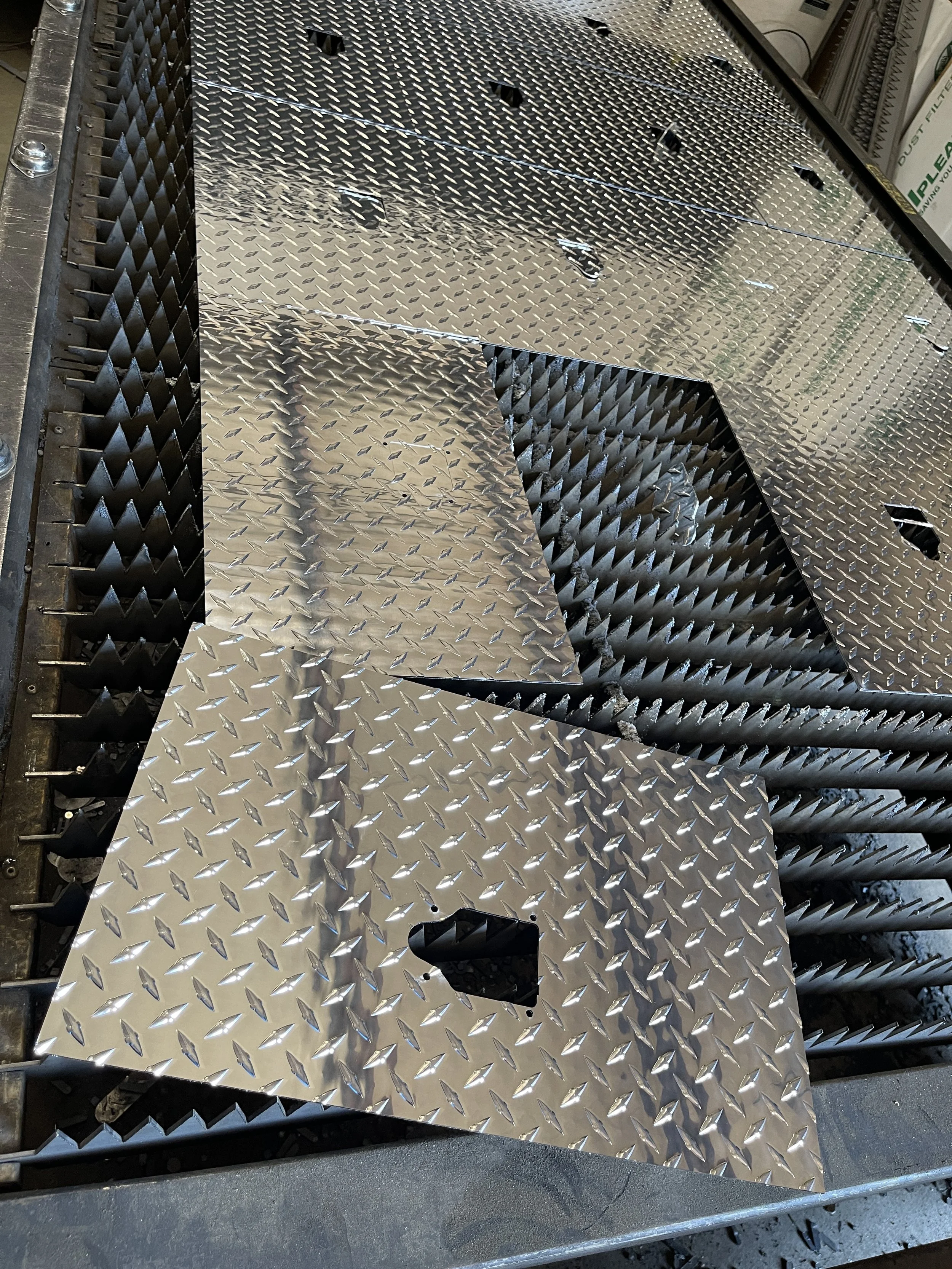
Fabrication involves cutting, forming, and assembling metal into a finished product. CNC machining often handles the detailed, precision-focused portions of that process.
For example:
A part may be cut or formed during fabrication
Then machined using CNC for exact dimensions or features
Then finished and assembled
Most real-world projects rely on a combination of both.
When CNC Machining Is the Right Choice
Not every part requires CNC machining, but it becomes important when precision and consistency are priorities.
It’s commonly used for:
Parts with tight tolerances
Components that need repeat accuracy
Projects involving detailed features
Production runs where consistency is critical
In these cases, CNC machining helps ensure the final product performs the way it should.
The Role of Experience
While CNC machines are highly capable, they still rely on experienced operators and proper setup.
Programming, material selection, and process planning all play a role in the final result. The machine follows instructions, but it takes knowledge and experience to make sure those instructions are right.
That’s where a skilled fabrication team makes the difference.
Final Thoughts
CNC machining is one of the key tools that allows modern fabrication to be both precise and scalable.
It brings together technology and experience to produce parts that are consistent, accurate, and built to perform. Whether it’s a one-off component or a high-volume production run, CNC plays an important role in getting the job done right.
At JAMM, it’s one of the many ways we make sure every part meets the standard, from the first piece to the last.
