
What Is Live Tooling and Why It Matters in Modern Metal Fabrication
In metal fabrication and machining, efficiency and precision aren’t just nice to have - they directly affect lead times, cost, and overall quality. One of the biggest advancements helping shops deliver better results is live tooling on CNC lathes. While the term may sound technical, what it means for customers is simple: better parts, fewer steps, and faster turnaround.
At JAMM Fabrication, adding a CNC lathe with live tooling expands how we support complex projects and keeps more of the work under one roof.
What Is Live Tooling?
Traditional CNC lathes are designed primarily for turning operations - spinning material while stationary tools shape the part. That works well for round components, but many modern parts require more than just turning. They need cross holes, slots, flats, tapped features, or milled details.
Live tooling allows cutting tools on a lathe to rotate, meaning milling, drilling, and tapping can happen while the part remains clamped in the same machine. Instead of moving the part to a separate mill for secondary operations, everything is completed in a single setup.
Why Live Tooling Is a Big Deal for Fabrication Shops
Every time a part is removed from a machine and re-clamped somewhere else, small alignment errors can creep in. Live tooling reduces or eliminates those extra setups, which leads to:
Tighter tolerances
Better feature alignment
Improved repeatability
For parts that need multiple features to line up precisely, this accuracy makes a real difference in performance and longevity.
Faster Production and Shorter Lead Times
Combining operations into one machine streamlines production. There’s less waiting between steps, less handling, and fewer bottlenecks. For customers, that often means:
Shorter lead times
Faster turnaround on repeat jobs
More predictable delivery schedules
Efficiency doesn’t mean rushing - it means removing unnecessary steps while maintaining quality.
Cost Control Without Cutting Corners
Because live tooling reduces labor, machine time, and part handling, it can help control overall project costs. Fewer setups and fewer machines involved translate into more efficient production.
The result is better value, especially for complex or high-volume parts, without sacrificing craftsmanship or precision.
What Types of Projects Benefit from Live Tooling?
Live tooling is especially valuable for parts that require both turned and milled features. Common examples include:
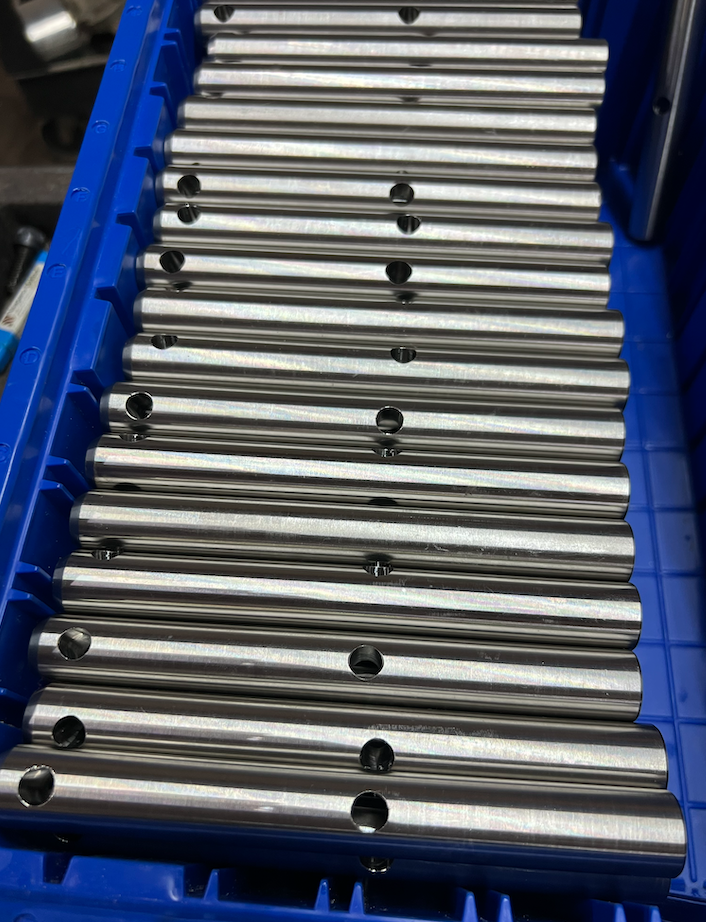
Shafts with cross holes or flats
Bushings and couplings with secondary features
Custom collars, fittings, and adapters
Components requiring drilling, tapping, or slotting
Parts with tight positional tolerances
These types of components are common across industrial, construction, infrastructure, and manufacturing applications - areas where consistency and reliability matter.
Why Live Tooling Matters to JAMM Customers
From a customer’s perspective, live tooling isn’t about the machine itself - it’s about the outcome.
It means:
Fewer vendors involved
Less back-and-forth between shops
Better quality control
Clearer communication throughout the project
Keeping more processes in-house allows JAMM to manage schedules, quality, and details more effectively, which leads to smoother projects and fewer surprises.
With the addition of a CNC lathe equipped with live tooling in our Texas shop, JAMM has expanded our machining and fabrication capabilities even further. This investment allows us to take on more complex parts, support tighter tolerances, and move projects through production more efficiently.
It also strengthens our ability to support customers from early concept through finished components, whether that’s a one-off custom part or a repeat production run.
At JAMM, technology is only as valuable as the people using it. Live tooling enhances what our experienced team already does best - thoughtful planning, precise execution, and building parts that perform in the real world.
Thinking About a Machined or Fabricated Part?
If your project requires multiple operations, tight tolerances, or consistent repeatability, live tooling may be the right solution. Whether you have detailed drawings, a sample part, or just an idea, our team can help determine the most efficient and effective approach.
Because better processes lead to better parts, and better parts lead to better results.
